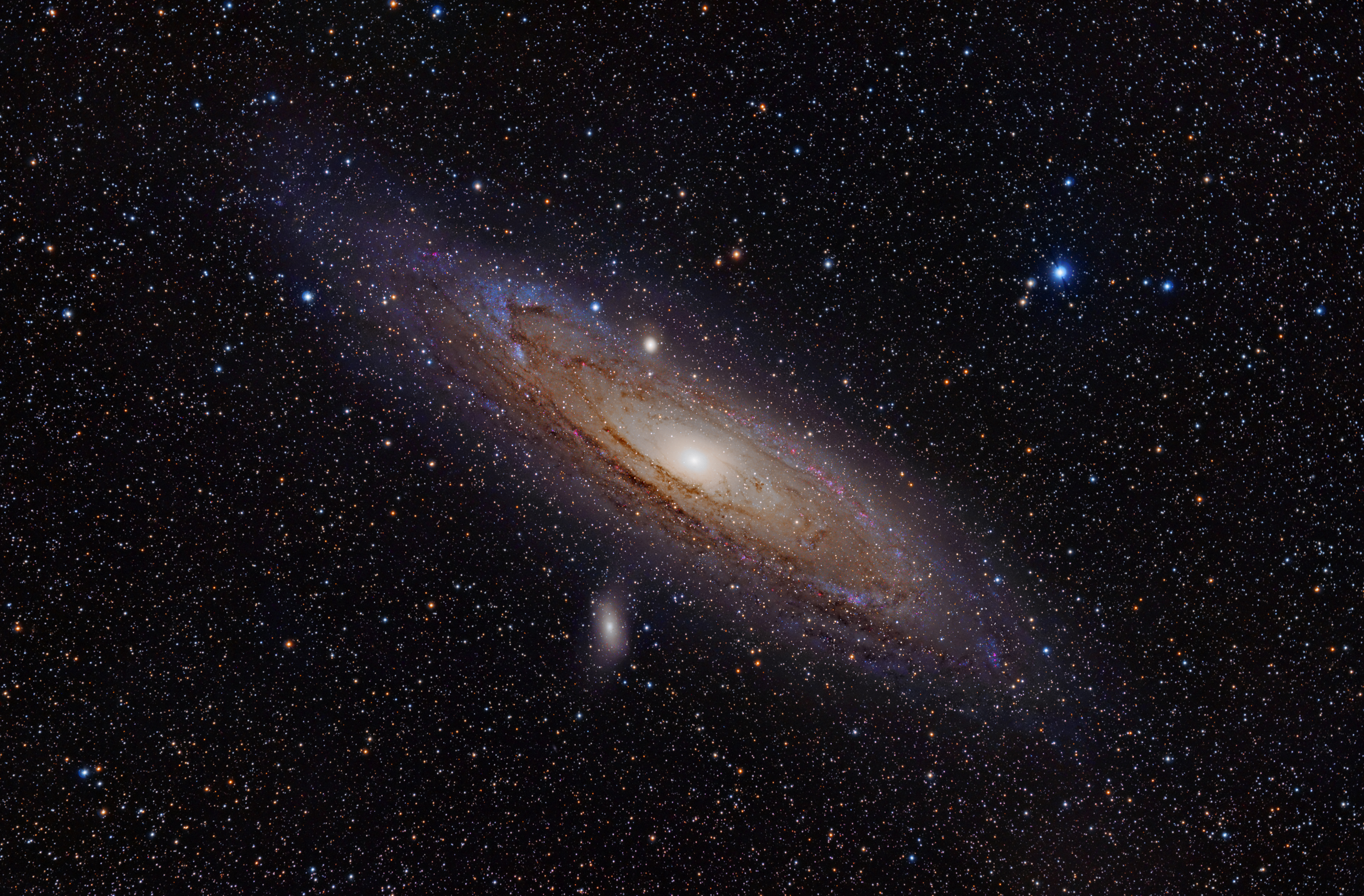
Light pollution across central Poland has increased significantly since the 1990s. Warsaw's skyglow is now visible from more than 100 kilometres away on clear nights. Finding sky conditions dark enough to see the Milky Way naked eye, let alone resolve faint nebulae with a telescope, requires deliberate planning rather than just driving to the nearest forest.
How sky darkness is measured
The Bortle scale runs from 1 (most pristine, extremely rare) to 9 (inner-city sky). The related Sky Quality Meter (SQM) gives a numerical magnitude-per-arcsecond-squared value: 22+ is very dark, 21+ is excellent, 20 is average rural, below 19 is suburban. Most observers in central Poland deal with Bortle 5–6 (SQM 20–21) at best without travelling more than 80 km from a large city.
The Light Pollution Map maintained at lightpollutionmap.info shows satellite-derived radiance data updated annually and is the most reliable planning resource available without professional instruments.
The Bieszczady region (Bortle 3–4)
The Bieszczady mountains in the far south-east of Poland, particularly the area around Wetlina, Cisna, and the Bieszczady National Park, offer the darkest skies routinely accessible within Poland. SQM readings above 21.5 have been recorded in the Muczne and Dwerniczek valleys on moonless nights. The Bieszczady National Park has the lowest population density in the country.
The area around Cisna is approximately 400 km from Warsaw (5 hours by car). Access to the best sites requires navigating forest tracks in some cases. Summer months bring the shortest nights (barely 7 hours of astronomical darkness at the solstice) but the most stable air. Autumn, from September to November, typically brings longer nights and good transparency before persistent cloud cover arrives in December.
Roztocze (Bortle 4–5)
The Roztocze region in south-eastern Poland, particularly around Zwierzyniec and Józefów, sits roughly 270 km from Warsaw and 150 km from Lublin. The Roztocze National Park protects a landscape with minimal agricultural light pollution. SQM values around 21–21.5 are typical at sites away from Zamość and Hrubieszów.
The terrain is flat, which simplifies setting up equatorial mounts without the horizon complications of mountainous areas. The southern horizon towards Ukraine is particularly dark. Roztocze is a practical choice for observers who want to minimise travel time while reaching genuinely rural skies.
Mazury lakes region (Bortle 4–5 at best sites)
Mazury is about 200 km from Warsaw. The lakes themselves create a problem: water reflects town lights and can cause local brightening of the horizon. However, the Suwałki Landscape Park, particularly between Suwałki and the Lithuanian border, offers some of the darkest skies reachable in 3 hours from Warsaw. SQM readings around 21.2–21.4 have been noted near Smolniki.
The Mazury observing season is complicated by summer mosquitoes and high humidity near the lakes, which reduces transparency. Clear nights cluster in September and October. The region also benefits from the low-horizon characteristic of glacial plains.
Góry Sowie and Sowie Mountains (Bortle 4–5)
In Lower Silesia, the Sowie Mountains between Świdnica and Dzierżoniów offer dark skies within 2.5–3 hours of Wrocław. The ridge at Wielka Sowa (1,015 m) gives an elevated horizon advantage and measurably darker skies than the surrounding lowlands. Light from Wałbrzych affects the northern horizon, but south and east remain relatively clean.
Sites within 100 km of Warsaw
Finding genuine darkness close to Warsaw is difficult but not impossible. The best options are the areas around Kampinos National Park's outer boundaries, particularly east of Sochaczew, and the Pilica river valley between Tomaszów Mazowiecki and Inowłódz. Neither reaches below Bortle 5 consistently, but on the best autumn nights SQM readings of 20.8–21.0 are possible at sites away from roads and farms.
For the Moon-free new moon period, these locations give acceptable conditions for Messier-list observing and wide-field astrophotography with fast lenses.
Practical logistics for a night out
- Check the IMGW-PIB forecast for cloud cover and atmospheric transparency, not just general weather. Satellite imagery is updated every 15 minutes during the day.
- Plan arrival 30–45 minutes before astronomical twilight ends. Equipment cool-down for mirrors takes at least this long to avoid mirror seeing.
- Moon phase determines the effective observing window. A gibbous Moon above 30° elevation raises the sky background by 1–2 SQM units.
- The Clear Dark Sky forecast is available for several Polish sites and shows transparency and seeing as separate parameters.
- Inform local farmers or foresters if parking on agricultural tracks. In protected areas, check current access restrictions with the national park authority before arrival.
Measuring sky darkness at your site
An SQM-L (Sky Quality Meter with Lens) retails for around 400 PLN. Point it at the zenith and take readings before and after astronomical twilight to establish a baseline for any regular site. Multiple readings on different nights give a statistical picture of what that location reliably offers. The GLOBE Observer app accepts citizen science sky brightness data.